Norwegian Forest Cat Diet, Feeding Schedule & Nutrition Guide (2026)
Write By ALI HAMZA
A Norwegian Forest Cat diet should be high-protein and animal-based, with moderate fat and minimal carbohydrates to support its large frame, dense coat, and muscular build. Feed kittens 3–4 small meals a day, adults 2–3 meals, and seniors smaller, more frequent portions. Always provide fresh water, and choose foods with named animal proteins listed first.
Quick Nutrition Summary
| Nutrition Factor | Recommended Guideline |
|---|---|
| Protein | 35–45% of diet (dry matter basis), animal-based |
| Fat | 15–25%, includes omega-3 and omega-6 fatty acids |
| Carbohydrates | Low; ideally under 10% |
| Taurine | Essential amino acid, must be present in every meal |
| Meals per day (adult) | 2–3 meals |
| Meals per day (kitten) | 3–4 meals |
| Average adult weight | 9–22 lbs (males larger than females) |
| Fresh water | Always available; wet food or fountain encouraged |
| Life stage foods | Kitten, adult, and senior formulas differ significantly |
What Is the Best Diet for a Norwegian Forest Cat?
Norwegian Forest Cats are a natural breed developed in cold Scandinavian climates. They evolved as hunters, which means their bodies are built to process animal protein efficiently, not grains or fillers. The best diet mirrors that biology as closely as possible.
Protein requirements. As obligate carnivores, Norwegian Forest Cats need diets built around real meat — chicken, turkey, salmon, or beef listed as the first ingredient. Protein fuels their muscular build and supports the thick double coat this breed is known for. Look for a minimum of 35–45% protein on a dry matter basis for adults, and higher for kittens.
Fat requirements. Fat isn’t something to avoid — it’s a primary energy source for cats and carries fat-soluble vitamins (A, D, E, K). Omega-3 fatty acids, found in fish oil and salmon, help maintain skin health and a glossy coat, which matters for a breed with such dense fur.
Carbohydrates. Cats don’t have a biological requirement for carbohydrates. Some dry food formulas use carbs as a binding agent, but the amount should stay low. Diets heavy in corn, wheat, or soy fillers can contribute to weight gain without adding real nutritional value.
Hydration. Cats evolved from desert-dwelling ancestors and have a naturally low thirst drive, so many don’t drink enough water from a bowl alone. Wet food, broths, and running water fountains all help maintain proper hydration, which supports kidney and urinary tract health over the long term.
Vet Advice: Every commercial cat food sold in the U.S. should carry an AAFCO (Association of American Feed Control Officials) statement confirming it’s “complete and balanced” for a specific life stage. Always check the label before buying.
READ ARTICLE ON :Norwegian Forest Cat Personality

Norwegian Forest Cat Feeding Schedule
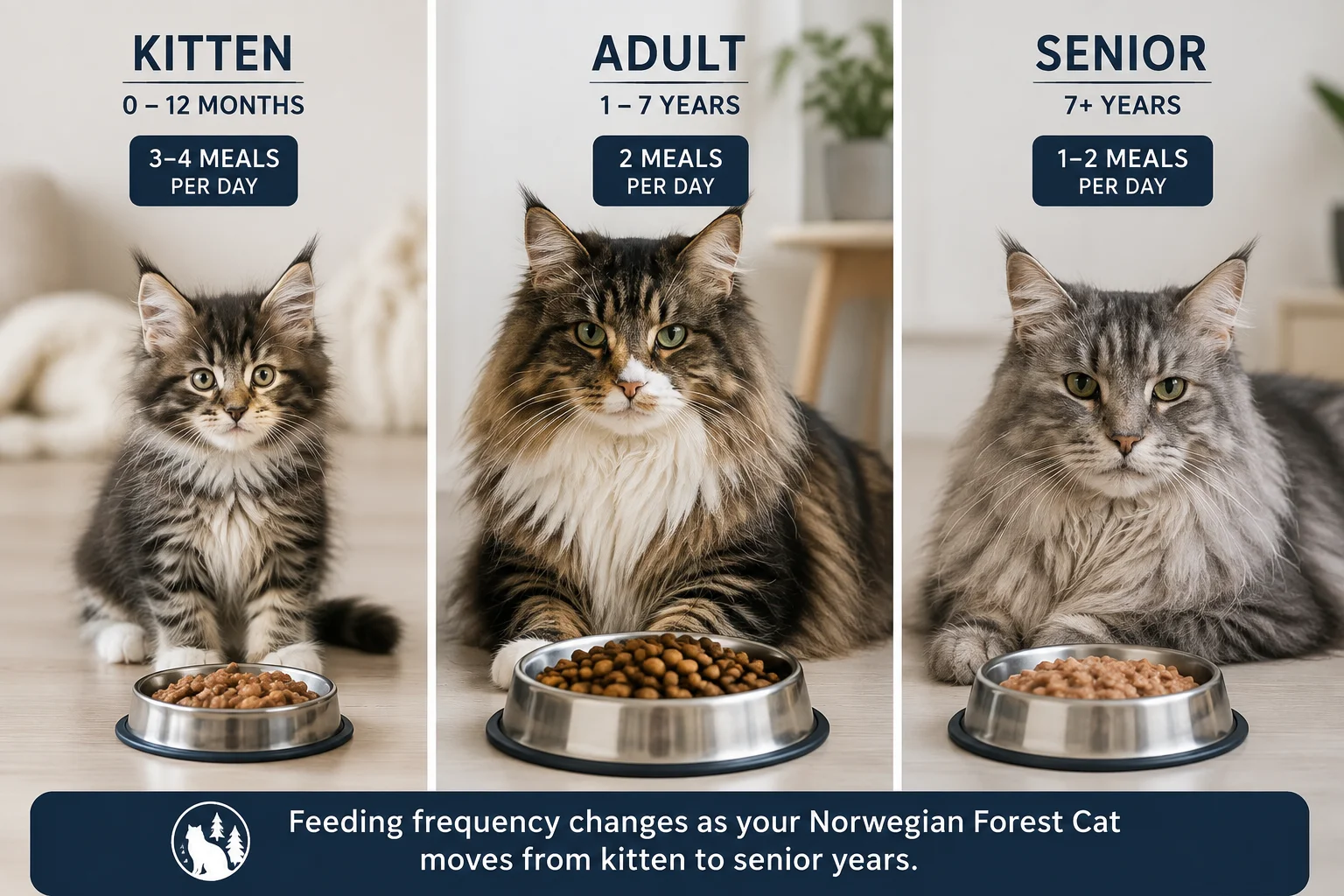
Feeding frequency should shift as your cat grows. Kittens have small stomachs and fast metabolisms, so they need frequent, smaller meals. Adults do well on a steady twice- or three-times-daily routine, and seniors often benefit from smaller, more frequent portions to ease digestion.
| Life Stage | Age Range | Meals Per Day | Portion Guidance |
|---|---|---|---|
| Kitten | 0–4 months | 4 meals | Free-feed or small meals every 4–5 hours |
| Kitten | 4–12 months | 3–4 meals | ¼–½ cup dry food equivalent, divided |
| Adult | 1–7 years | 2–3 meals | ⅓–½ cup dry food equivalent, divided (varies by weight/activity) |
| Senior | 7+ years | 3 smaller meals | Slightly reduced calories, adjusted for activity and health |
Did You Know? Norwegian Forest Cats mature slowly and may not reach full physical size until they’re 4–5 years old, which is later than most domestic breeds. Their feeding needs during this extended growth period stay closer to “large breed kitten” guidelines for longer.

Best Food for Norwegian Forest Cats
There’s no single “best” food format — each has trade-offs. Many owners use a mix to balance hydration, dental benefits, and convenience.
| Food Type | Pros | Cons |
|---|---|---|
| Wet food | High moisture, supports hydration, palatable | More expensive, spoils faster once opened |
| Dry food | Convenient, longer shelf life, supports dental chewing | Lower moisture, easy to overfeed |
| Freeze-dried/raw-inspired | High protein, minimally processed | Costly, requires careful handling and food safety practices |
| Fresh/human-grade food | Whole ingredients, high palatability | Expensive, needs refrigeration, shorter shelf life |
| Homemade diets | Full ingredient control | Risk of nutrient imbalance without veterinary formulation |
| Prescription diets | Formulated for specific health conditions (kidney, urinary, weight) | Requires a vet’s prescription, not for general use |
Homemade and raw diets can work, but only when formulated by or reviewed with a veterinary nutritionist. Without that oversight, they’re one of the most common causes of nutrient deficiencies in home-fed cats — most notably taurine deficiency, which can cause heart disease.
For most owners, a high-quality commercial wet or dry food that meets AAFCO standards, paired with occasional fresh or freeze-dried toppers, is the most practical and nutritionally reliable approach. For product options, see our guide to the Best Food for Norwegian Forest Cats.
How Much Should a Norwegian Forest Cat Eat?
Portion size depends on more than just age. Several factors combine to determine daily calorie needs:
- Weight and body condition. Larger cats need more calories, but only enough to maintain — not exceed — a healthy weight.
- Activity level. An active cat that climbs, plays, and roams needs more fuel than one that naps most of the day.
- Indoor vs. outdoor. Indoor cats generally burn fewer calories and are more prone to weight gain, so portions should be adjusted downward compared to outdoor or highly active cats.
- Age. Growing kittens need significantly more calories per pound of body weight than adults; seniors often need fewer.
READ ARTICLE ON : Norwegian Forest Cat Size
Calories by Life Stage (approximate, for a 12 lb adult)
| Life Stage | Estimated Daily Calories |
|---|---|
| Kitten (growth) | 250–350 kcal/day, adjusted for age and weight |
| Adult (average activity) | 200–300 kcal/day |
| Adult (active/large male) | 300–400 kcal/day |
| Senior (reduced activity) | 180–250 kcal/day |
These are starting points, not fixed rules. Because Norwegian Forest Cats vary widely in adult size — some males reach 20+ lbs — calorie needs should be based on your individual cat’s ideal weight, not the breed average. Your veterinarian can help calculate a more precise target using a body condition score.

Foods Norwegian Forest Cats Should Never Eat
Some common human foods are toxic to cats, even in small amounts. Keep these away from your Norwegian Forest Cat at all times.
| Food | Why It’s Dangerous |
|---|---|
| Onions & garlic | Damage red blood cells, can cause anemia |
| Chocolate | Contains theobromine, toxic to a cat’s heart and nervous system |
| Grapes & raisins | Linked to kidney failure in cats |
| Raw dough (yeast) | Expands in the stomach, can cause dangerous bloating and alcohol toxicity |
| Alcohol | Extremely toxic even in tiny amounts |
| Caffeine | Can cause rapid heart rate, tremors, seizures |
| Xylitol (sweetener) | Causes a dangerous drop in blood sugar |
| Raw eggs | Risk of salmonella and biotin deficiency |
| Cow’s milk | Most adult cats are lactose intolerant; causes digestive upset |
| Dog food | Lacks sufficient taurine and other nutrients cats need |
Common Mistake: Sharing “just a little” table scraps seems harmless, but many households don’t realize how small a toxic dose can be for a cat’s body weight. When in doubt, don’t feed it — and call your vet or the ASPCA Animal Poison Control Center immediately if your cat eats something on this list.
Kitten Diet
Kittens go through rapid physical development, and Norwegian Forest Cat kittens grow for longer than most breeds. Their diet needs to keep pace.
Weaning. Kittens typically wean between 4–8 weeks, transitioning gradually from mother’s milk (or kitten milk replacer) to soft, then solid, kitten food.
Growth. A large-breed kitten formula supports steady, controlled bone and joint development rather than rapid weight gain, which can stress developing joints.
Protein. Kittens need more protein per pound than adults — often 40%+ on a dry matter basis — to fuel muscle and tissue growth.
Meal frequency. Because kitten stomachs are small, 3–4 meals a day (or free-feeding measured portions) works better than one or two large meals.
Adult Diet
Once a Norwegian Forest Cat reaches maturity — which can take up to 4–5 years for males — the focus shifts from growth to maintenance.
Maintenance. Adult formulas balance protein, fat, and calories to sustain (not build) muscle and body condition.
Healthy weight. Portion control matters more here than at any other life stage, since adult cats are the most prone to gradual, unnoticed weight gain.
Activity. More active cats — climbers, hunters, playful cats — can handle slightly higher-calorie diets. Sedentary indoor cats need tighter portion control.
Senior Diet
Senior Norwegian Forest Cats (generally 7+ years) often need dietary adjustments to support aging bodies.
Joint support. Omega-3 fatty acids and, in some cases, glucosamine/chondroitin can help support aging joints in a breed with a naturally large, heavy frame.
Kidney support. Kidney function often declines with age. Senior diets sometimes moderate phosphorus levels, but any kidney-specific diet should be guided by a veterinarian and bloodwork.
Digestive health. Senior cats may need more digestible protein sources and, in some cases, added fiber to support digestion.
Dental considerations. Dental disease is common in older cats. If chewing dry kibble becomes difficult, wet food or softened kibble can help maintain adequate intake.
Weight Management
Obesity is one of the most common — and most preventable — health issues in cats, and a large breed like the Norwegian Forest Cat can carry extra weight without it being obvious at a glance.
Preventing obesity.
- Measure meals rather than free-pouring.
- Limit treats to under 10% of daily calories.
- Avoid feeding based solely on the bag’s suggested amount — those are averages, not individualized targets.
Body condition monitoring. Rather than relying on the scale alone, check body condition by feel: you should be able to feel (not see) the ribs with light pressure, and your cat should have a visible waist when viewed from above.
Exercise. Interactive play, cat trees, and climbing structures encourage activity — especially useful for indoor cats, and this breed’s natural climbing instinct makes vertical space particularly effective.
Supplements
Most cats eating a complete and balanced commercial diet don’t need supplements. Adding extras without a clear reason can actually throw off the careful nutrient balance manufacturers formulate for.
Supplements may be appropriate when a veterinarian recommends them for a specific reason — such as omega-3s for a skin or coat issue, joint support for an older or arthritic cat, or a probiotic for digestive sensitivity. Outside of those targeted situations, a complete commercial diet already supplies the vitamins and minerals a healthy cat needs.
Vet Advice: Always talk to your veterinarian before adding any supplement, including “natural” ones. Some vitamins (like A and D) can be toxic in excess.
READ ARTICLE ON : Norwegian Forest Cat Lifespan
Common Feeding Mistakes
- Free-feeding dry food 24/7 without portion control
- Switching foods abruptly (should be done over 7–10 days)
- Using the bag’s feeding chart without adjusting for your cat’s actual weight and activity
- Giving too many treats
- Feeding dog food or human food as a regular substitute
- Not providing enough fresh water alongside dry food
- Ignoring gradual weight gain until it becomes a health issue
- Feeding an all-raw or homemade diet without veterinary formulation

Frequently Asked Questions
1. What is the best food for a Norwegian Forest Cat?
A high-protein commercial wet or dry food that meets AAFCO standards, with a named animal protein as the first ingredient, is generally best.
2. How many times a day should I feed my Norwegian Forest Cat?
Kittens need 3–4 meals daily, while adults typically do well with 2–3 meals a day.
3. Do Norwegian Forest Cats need a special diet?
They don’t need a breed-specific diet, but because they’re a large, slow-maturing breed, large-breed or high-protein formulas often fit them well.
4. How much should an adult Norwegian Forest Cat eat per day?
Most adults need roughly 200–300 calories a day, though this varies by weight, activity level, and whether they’re indoor or outdoor.
5. Can Norwegian Forest Cats eat raw food?
They can, but only if the diet is formulated by or reviewed with a veterinary nutritionist to avoid nutrient imbalances.
6. Is wet or dry food better for Norwegian Forest Cats?
Both can work well; wet food supports hydration, while dry food offers convenience. Many owners combine the two.
7. What foods are toxic to Norwegian Forest Cats?
Onions, garlic, chocolate, grapes, raisins, raw dough, caffeine, alcohol, and xylitol are all dangerous and should never be fed.
8. How much water should a Norwegian Forest Cat drink daily?
Water needs vary by size and diet, but cats eating mostly dry food need more supplemental water than those eating wet food.
9. When should I switch my Norwegian Forest Cat from kitten to adult food?
Most cats can transition around 12 months, though because this breed matures slowly, some owners continue large-breed kitten formulas slightly longer under vet guidance.
10. How do I know if my Norwegian Forest Cat is overweight?
You should be able to feel their ribs with light pressure and see a waist from above; if not, they may be carrying excess weight.
11. Do Norwegian Forest Cats need grain-free food?
Not necessarily — grain-free isn’t inherently healthier, and the priority should be a diet low in fillers with high animal protein content, regardless of grain content.
12. Can I feed my Norwegian Forest Cat a homemade diet?
Yes, but only with a recipe formulated or reviewed by a veterinary nutritionist to ensure it’s nutritionally complete.
13. What treats are safe for Norwegian Forest Cats?
Small amounts of cooked, plain meat or commercial cat treats are safe, but treats should stay under about 10% of daily calorie intake.
14. Do senior Norwegian Forest Cats need a different diet?
Often yes — senior diets may support joint health, digestion, and kidney function, though changes should be guided by your veterinarian and bloodwork.
Healthy Treat Guide
| Treat Type | Guidance |
|---|---|
| Freeze-dried meat | Great high-protein option in moderation |
| Commercial cat treats | Choose ones with real meat as the first ingredient |
| Cooked plain chicken/fish | Small, unseasoned pieces only |
| Catnip | Not a food, but a safe occasional enrichment treat |
| Foods to avoid as treats | Dairy, deli meats (high sodium), cooked bones |
Bringing It All Together: Products That Support a Healthy Diet
A few well-chosen tools make consistent, healthy feeding easier day to day:
- High-quality cat food — the foundation of good nutrition; look for AAFCO-compliant formulas with real animal protein first on the label. See our Best Food for Norwegian Forest Cats guide.
- Automatic feeder — helps maintain consistent meal timing and portion control, especially useful for multi-meal schedules. See Best Automatic Cat Feeders.
- Water fountain — encourages cats to drink more, supporting hydration and urinary health. See Best Cat Water Fountains.
- Food storage container — keeps dry food fresh and protects against pests and moisture.
- Stainless steel bowls — easy to sanitize and gentler on sensitive chins than plastic. See Best Cat Bowls.
- Elevated feeding station — can improve posture and comfort during meals for a large-bodied breed.
- Travel food container — useful for keeping portions accurate and food fresh when traveling or visiting the vet.
READ ARTICLE ON : Norwegian Forest Cat Cost
Conclusion
A Norwegian Forest Cat thrives on a diet built around real animal protein, moderate healthy fats, minimal carbohydrates, and consistent access to fresh water. Feeding needs shift meaningfully across kitten, adult, and senior years, so adjusting portions and formulas as your cat ages matters just as much as choosing a quality food in the first place. Careful portion control and regular body condition checks go a long way toward preventing obesity — one of the most common, and most preventable, health issues in the breed.
Because every cat’s ideal calorie needs, activity level, and health history differ, use this guide as a starting framework and work with your veterinarian to fine-tune a feeding plan specific to your cat.
For more on raising a healthy Norwegian Forest Cat, explore our related guides: Norwegian Forest Cat Personality, Norwegian Forest Cat Size, Norwegian Forest Cat Lifespan and Norwegian Forest Cat Cost.
1 Comment
[…] READ ARTICLE ON : Norwegian Forest Cat Diet […]